PriceHub.AI
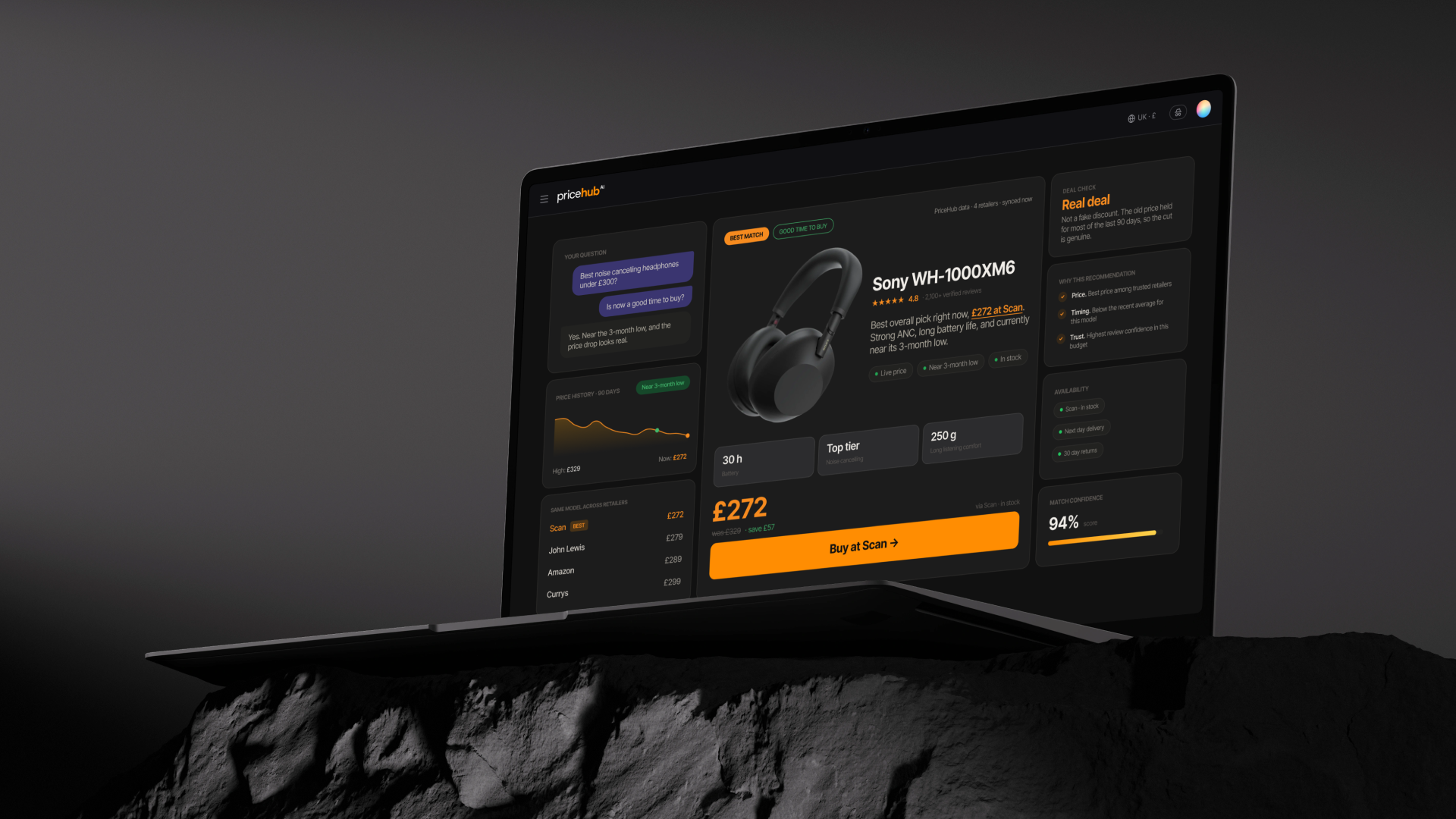
PriceHub.AI is a shopping product in development that connects natural-language questions with verified product data, pricing and real market information.
Just ask
A shopper asks a normal buying question. PriceHub.AI connects it with product and market data and returns an answer designed to help with a specific decision.
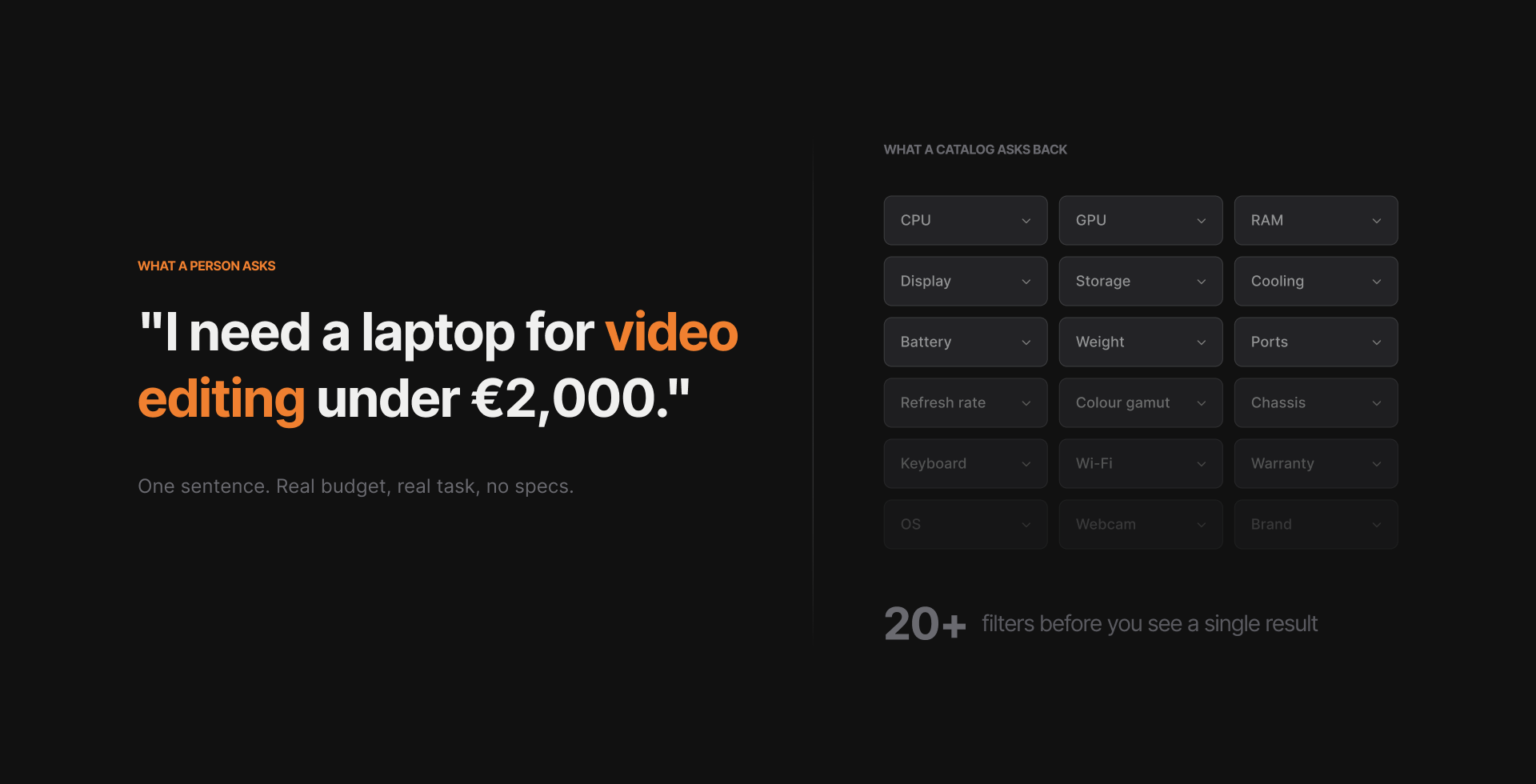
People don’t shop in specifications
A shopper rarely starts with a list of technical parameters. They know what they need: a laptop for video editing under €2,000, a robot vacuum within a certain budget, or headphones that are worth buying right now.
From a natural question to a useful answer
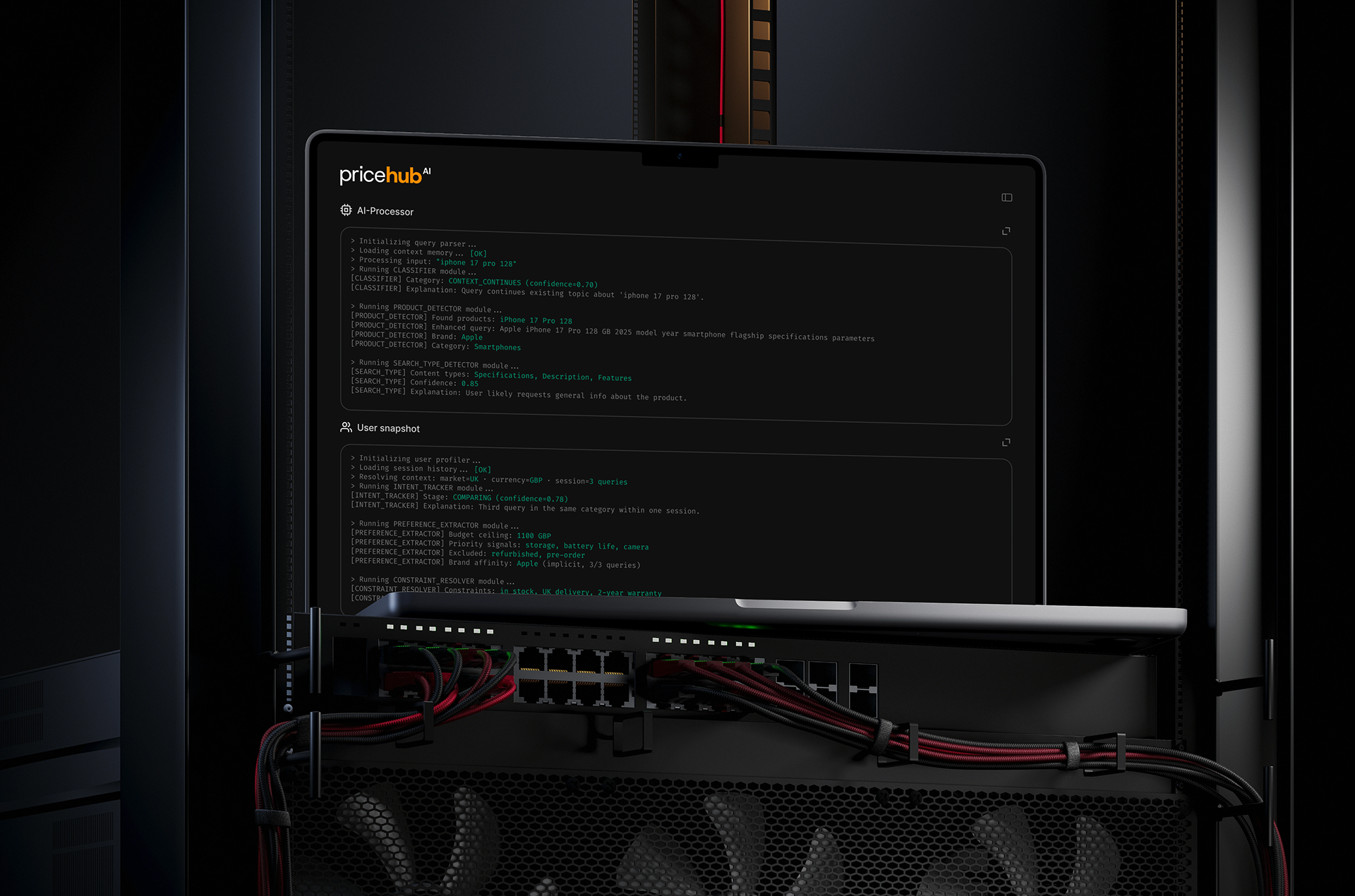
PriceHub.AI first needs to understand the shopper’s intent and connect it with the product catalog, pricing, availability and other relevant data. The result should not be just generated text, but an answer that helps with a real buying decision.
An answer doesn’t have to be just text
Some questions need more than another paragraph. PriceHub.AI can combine a concise conclusion with the current price, its position in the price history, retailer offers and a relevant next action.
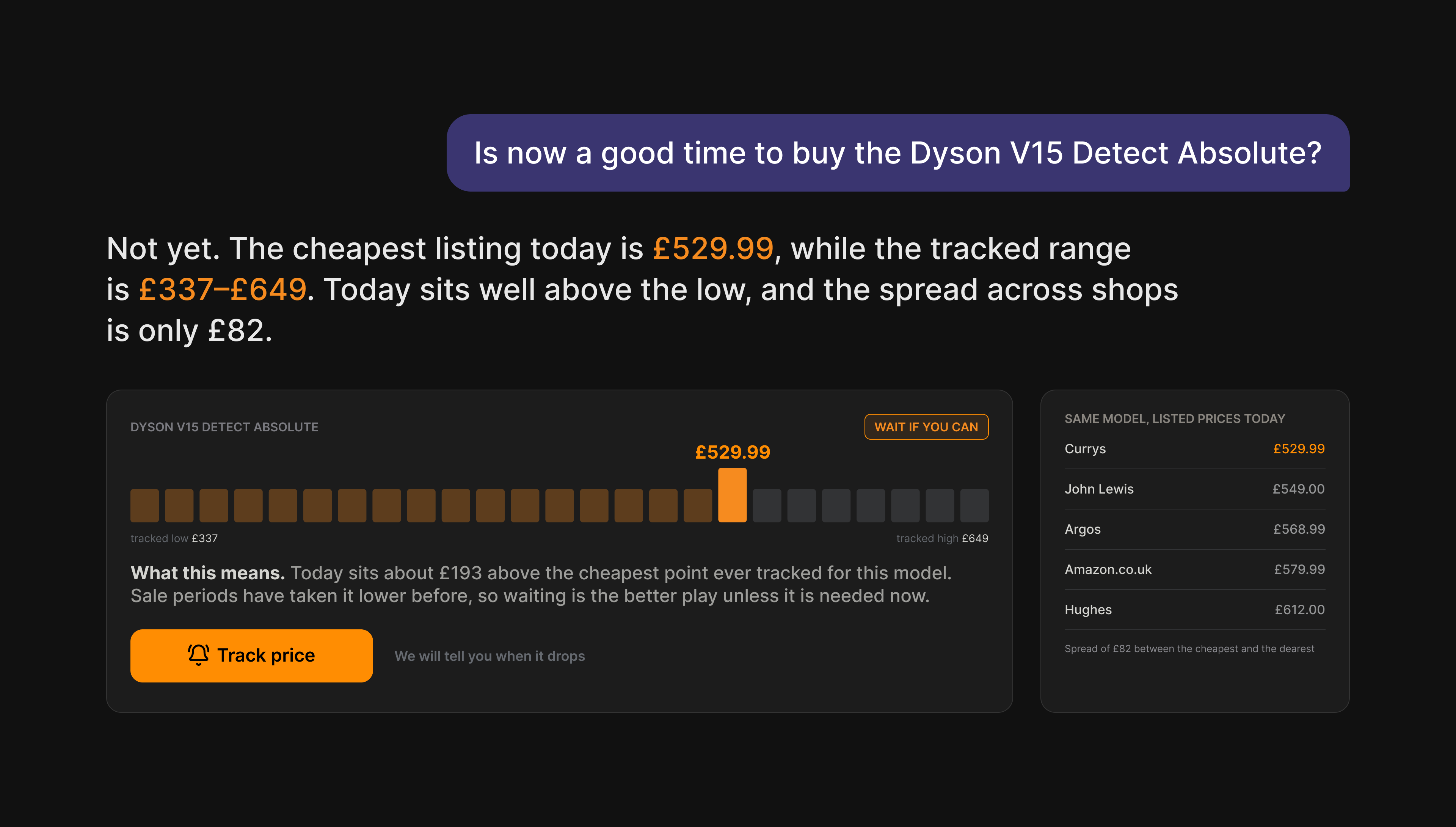
Not just the current price, but the market context
When the question is whether to buy now or wait, today’s price alone is not enough. The PriceHub.AI concept can also use price history and patterns from previous product generations to give the answer useful context for that decision.
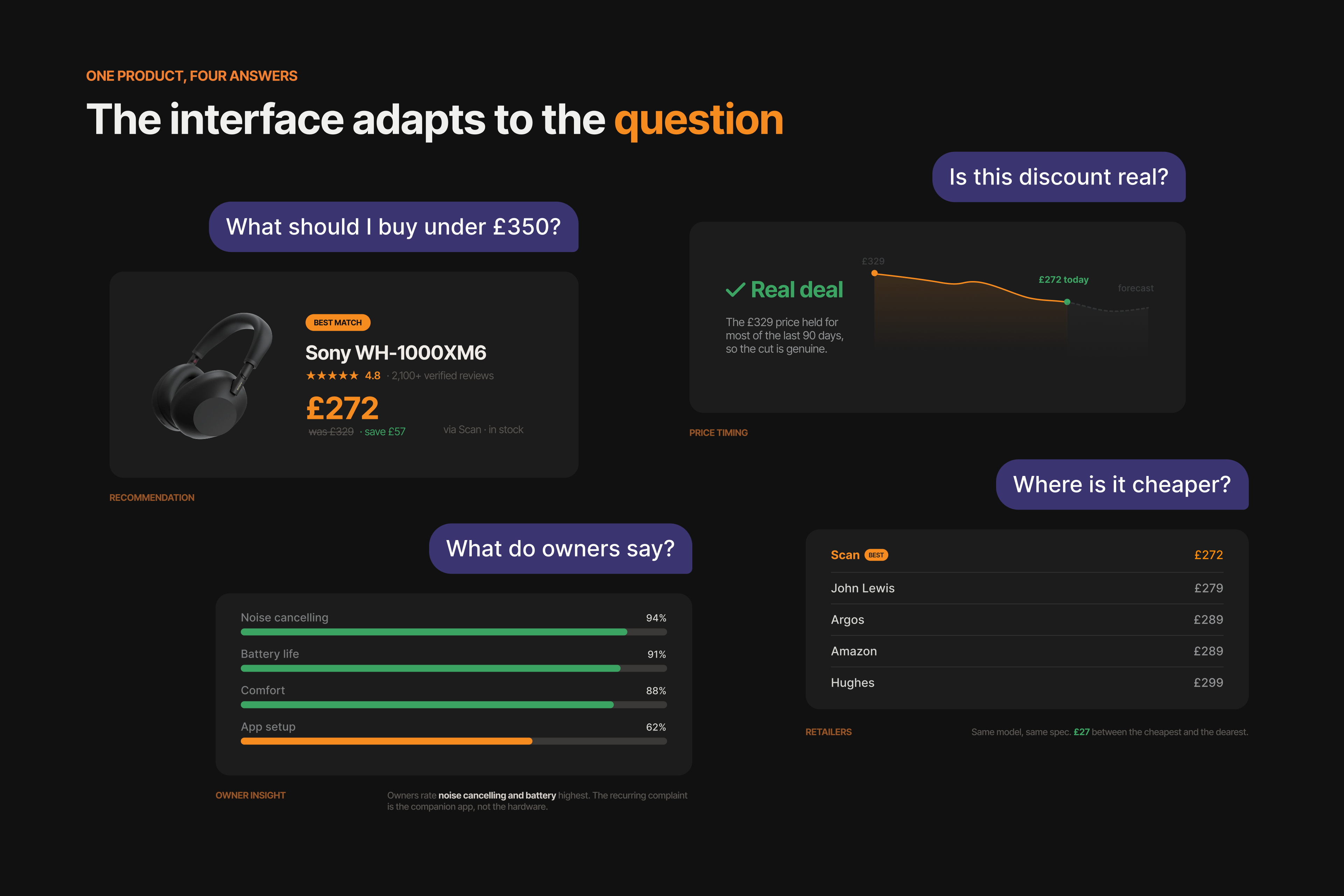
The interface adapts to the question
One conversation does not have to return the same type of answer every time. Depending on the shopper’s intent, the response can become a recommendation within a budget, a deal check, a retailer comparison or a summary of owner feedback.
A product system, not just a chatbot
Several layers sit behind each answer — intent understanding, product data, current prices, availability and the logic that decides what the shopper should see at that moment.
The product is still in development
PriceHub.AI is gradually moving from product exploration toward a working interface prototype. The concepts in this case study help define the interaction model, response patterns, information hierarchy and visual direction. The interface will continue to evolve through prototyping and testing.